Crochet for Beginners
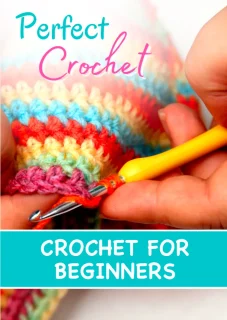
A friendly first book that explains crochet tools, hook grips and the chain stitch, then guides you through an easy first project.
The Crochet Bible · 102 pages · PDF
Crochet styles, stitch patterns and step-by-step finishing techniques
Go beyond the basics with circles and spirals, buttonholes, borders, beads, sequins and cords, plus a tour of more than 25 crochet styles.
Once you can make a row of double crochet, the next question is usually how people make everything else: flat circles, neat buttonholes, scalloped borders, pom poms, beaded surfaces. This book collects those crochet techniques in one place and pairs them with a tour of the many styles crochet can take.
Chapter 1 helps you choose what to make and introduces textured stitch patterns such as the mussel (shell) pattern, tuft stitches, burl, colorful pimples, flat nubs, popcorn stitches, filet or net pattern and grid pattern. It also covers yarn put-ups (ball, skein and hank), yarn weights, and how social media can help you find designs.
Chapter 2 is a guided tour of more than 25 styles, each with a short explanation: symbol crochet, Tunisian, hairpin lace, overlay, pineapple, amigurumi, Aran, Bavarian, Bruges, filet, finger crochet, Clones lace, freeform, Irish, broomstick, clothesline, Bosnian, bullion, micro crochet and more. It's a handy map when you're deciding what to learn next.
Chapter 3 revisits the core stitches as they appear in patterns, including working in columns and rows, counting and turning. Chapter 4 is the practical workshop: shell and double braids, hairpin crochet, horizontal and vertical buttonholes, crocheting a circle in concentric and spiral rounds, squares, overcasting, surface knots and surface slip stitch, crocheting in beads and sequins, making cords, crochet flowers, ridges, shell borders and picots, sewing on buttons, pom poms, crocheting over plastic rings, overlay crochet, turning chains, working in rows and switching colors.
If your finished pieces start to pile up, the bonus chapter compares craft fairs and shows, online marketplaces and opening your own online store, with points to consider for each.
It helps. The book reviews single, double and treble crochet in the context of patterns, but it moves quickly into techniques like circles, spirals, buttonholes and borders. If you're completely new, start with Crochet for Beginners and Crochet Basic Stitches, then come back here.
No. The styles chapter is an overview that explains what each style is and how it differs, so you can decide what to explore next. Tunisian crochet has its own dedicated book in the collection, and amigurumi is covered in two full pattern books.
It compares three routes for selling handmade crochet: craft fairs and shows, online marketplaces and opening your own online store. It outlines what to think about for each, such as your audience and pricing, so you can choose the approach that fits your time and goals.
A friendly first book that explains crochet tools, hook grips and the chain stitch, then guides you through an easy first project.
A step-by-step stitch reference from chain to triple treble, with separate chapters for right- and left-handed crocheters and a guide to blocking.
Decode abbreviations, symbols, gauge and US versus UK terms so you can follow any written or charted crochet pattern with confidence.
More than 40 easy crochet patterns for the kitchen, home, wardrobe and gift list, plus washing instructions and answers to common questions.
A compact introduction to Tunisian crochet: the long hook, the two-pass method, nine core stitches, shaping, binding off and textured patterns.
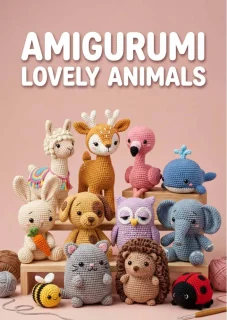
Twelve detailed amigurumi animal patterns, from an octopus and seahorse to a sloth, puppy, piggy and sleepy sheep.
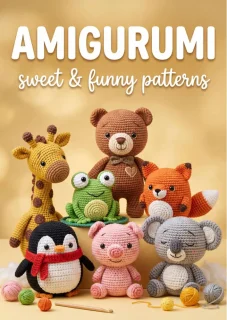
Cute amigurumi patterns for a bunny, dragon, turtle, elephant, giraffe, penguin, little dino, unicorn and more, from beginner to intermediate.
A short, practical guide packed with organizing hacks, tension advice and fixes for the most common crochet mistakes.