Crochet for Beginners
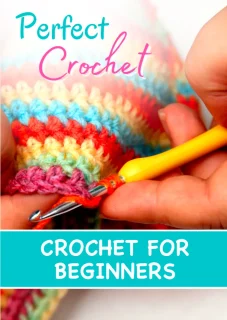
A friendly first book that explains crochet tools, hook grips and the chain stitch, then guides you through an easy first project.
The Crochet Bible · 49 pages · PDF
Abbreviations, terms, charts and gauge made clear
Decode abbreviations, symbols, gauge and US versus UK terms so you can follow any written or charted crochet pattern with confidence.
A crochet pattern is really a compact set of instructions written in shorthand. Once you know the shorthand, you can follow designs from books, magazines and designers anywhere. This guide shows you how to read crochet patterns, one section at a time, so abbreviations like sc2tog, BLO and FPdc stop being a roadblock.
Chapter 1 opens with a checklist for starting any pattern: check the difficulty level, confirm the finished size, gather the listed yarn and hook, make a swatch, note which stitches are used and learn the key. It then provides a long alphabetical list of common abbreviations, explains what asterisks and repeats mean, and sets out the terminology differences between the US, Canada and the UK, so you can tell at a glance which system a pattern is using.
Chapter 2 explains the variations that show up constantly in modern designs: back loop and front loop stitches, extended stitches, and raised or relief stitches including front post and back post. It also introduces raised rib, basketweave, crossed stitch and spike stitch, with notes on the texture each creates.
Chapter 3 is the practical walkthrough. It covers the materials section, gauge and why it matters, pattern abbreviations in context, and how to read pattern charts and the symbols they use. You'll learn the difference between working in rounds and rows, why counting stitches at the end of each row saves you from surprises, and how to handle circle patterns, including working into a center ring or directly into the chain. Three worked examples at the end show a pattern being interpreted step by step.
The book also includes practical habits such as counting stitches every ten rows and using a row counter, whether that's an app, a clicker or a pencil and paper.
Both. The book explains written instructions and abbreviations and also has sections on pattern charts and crochet symbols, including what the common symbols mean and how to follow a chart for rows and for circles worked in the round from a center ring.
The book sets out the naming differences side by side. A quick tip: UK patterns don't use the term single crochet at all, so if you see sc, it's almost certainly written in US terms. When in doubt, check the pattern's notes or stitch key.
Gauge is the number of stitches and rows in a measured square. If yours differs from the pattern, the finished piece will come out bigger or smaller and use a different amount of yarn. The book explains how to read gauge information and make a swatch to check yours.
A friendly first book that explains crochet tools, hook grips and the chain stitch, then guides you through an easy first project.
A step-by-step stitch reference from chain to triple treble, with separate chapters for right- and left-handed crocheters and a guide to blocking.
Go beyond the basics with circles and spirals, buttonholes, borders, beads, sequins and cords, plus a tour of more than 25 crochet styles.
More than 40 easy crochet patterns for the kitchen, home, wardrobe and gift list, plus washing instructions and answers to common questions.
A compact introduction to Tunisian crochet: the long hook, the two-pass method, nine core stitches, shaping, binding off and textured patterns.
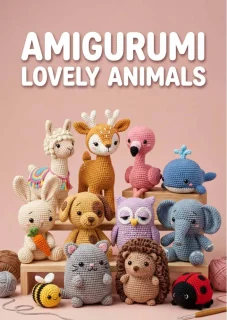
Twelve detailed amigurumi animal patterns, from an octopus and seahorse to a sloth, puppy, piggy and sleepy sheep.
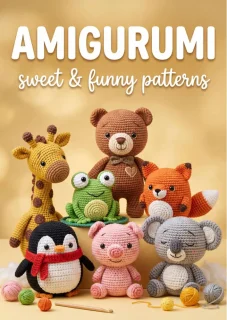
Cute amigurumi patterns for a bunny, dragon, turtle, elephant, giraffe, penguin, little dino, unicorn and more, from beginner to intermediate.
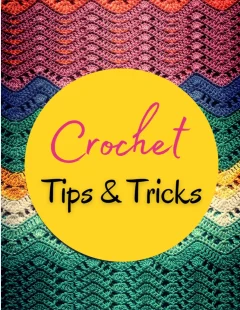
A short, practical guide packed with organizing hacks, tension advice and fixes for the most common crochet mistakes.