Crochet for Beginners
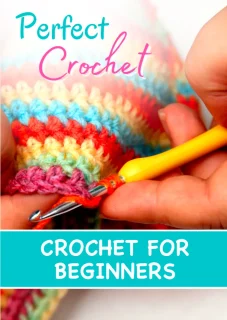
A friendly first book that explains crochet tools, hook grips and the chain stitch, then guides you through an easy first project.
The Crochet Bible · 25 pages · PDF
Tools, forward and reverse passes, core stitches and textured patterns
A compact introduction to Tunisian crochet: the long hook, the two-pass method, nine core stitches, shaping, binding off and textured patterns.
Tunisian crochet looks like a cross between knitting and weaving, yet you make it with a single hook. It produces a dense, textured fabric with neat edges that barely stretches sideways, which makes it lovely for blankets, cowls, headbands and scarves. This short guide is designed as Tunisian crochet for beginners who already know how to chain.
The book starts by comparing tools, construction and fabric. Tunisian work uses a longer hook, usually with a knob at the end, because you hold a whole row of loops on it at once. Each row is worked in two stages: the forward pass, where you pick up loops across the row, and the reverse pass, where you work them off again. The result has a distinct front and back and a firm, woven feel.
You'll learn the Tunisian simple stitch first, then the reverse stitch, knit stitch (which resembles knitted stockinette), purl stitch and a 2 by 2 rib. The guide also introduces the Tunisian double crochet, full stitch, basket weave and honeycomb stitches, explaining the texture each creates and where it works best.
Detailed steps show how to work the foundation row into the back bumps of the chain, complete the reverse pass, work the knit stitch forward and reverse, and bind off for a neat top edge. A section on shaping covers increasing and decreasing within a row and at the left and right edges, and how to add buttonholes.
The final section explains how to work in two colors and presents ten stitch patterns created by varying how loops are picked up and worked off, including relief and nub textures. These are marked as better suited to crocheters with some practice.
Yes. Tunisian crochet holds a whole row of loops on the hook, so it uses a longer hook with an even shaft, usually with a knob or stopper at the end to keep loops from sliding off. The book explains how these differ from a standard crochet hook before you begin.
It's best if you can already make a chain and a basic stitch or two. The guide explains Tunisian crochet from its foundation row onward, but it is short and focused, so general crochet basics are covered elsewhere in the collection, such as in Crochet for Beginners.
The fabric is dense and warm with neat edges and very little sideways stretch. The book suggests the simple stitch for cowls and headbands, the full stitch for scarves and reversible pieces, and textured stitches such as basket weave and honeycomb for blankets and decorative panels.
A friendly first book that explains crochet tools, hook grips and the chain stitch, then guides you through an easy first project.
A step-by-step stitch reference from chain to triple treble, with separate chapters for right- and left-handed crocheters and a guide to blocking.
Go beyond the basics with circles and spirals, buttonholes, borders, beads, sequins and cords, plus a tour of more than 25 crochet styles.
Decode abbreviations, symbols, gauge and US versus UK terms so you can follow any written or charted crochet pattern with confidence.
More than 40 easy crochet patterns for the kitchen, home, wardrobe and gift list, plus washing instructions and answers to common questions.
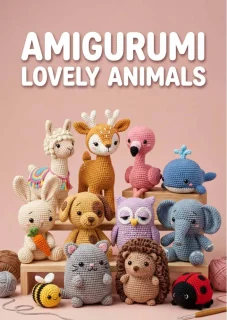
Twelve detailed amigurumi animal patterns, from an octopus and seahorse to a sloth, puppy, piggy and sleepy sheep.
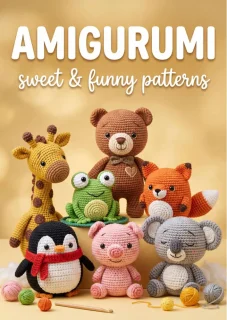
Cute amigurumi patterns for a bunny, dragon, turtle, elephant, giraffe, penguin, little dino, unicorn and more, from beginner to intermediate.
A short, practical guide packed with organizing hacks, tension advice and fixes for the most common crochet mistakes.