Crochet for Beginners
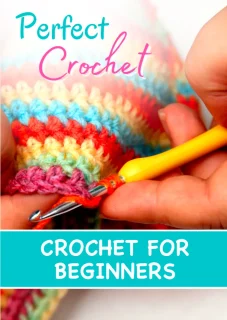
A friendly first book that explains crochet tools, hook grips and the chain stitch, then guides you through an easy first project.
The Crochet Bible · 103 pages · PDF
Cuddly animals and playful creatures, step by step
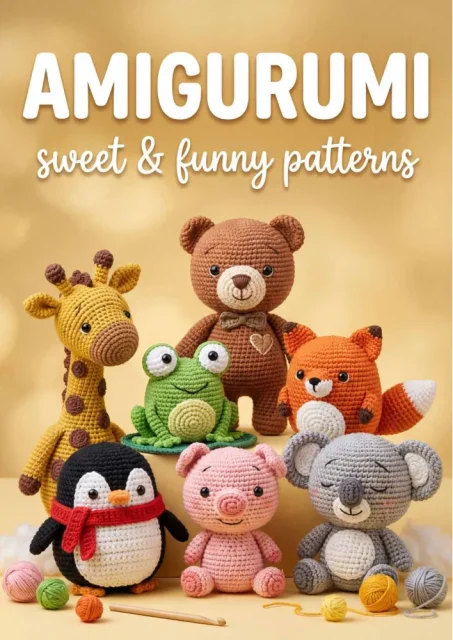
Cute amigurumi patterns for a bunny, dragon, turtle, elephant, giraffe, penguin, little dino, unicorn and more, from beginner to intermediate.
Some toys are made to sit on a shelf; these are made to be squeezed. This book brings together cute amigurumi patterns for playful animals and fantasy creatures, with clear sizes, skill levels and materials for each, so you can pick a project that fits your time and experience.
Several patterns are ideal first toys. The octopus is marked suitable for beginners and finishes at roughly 10 cm tall. The penguin is a beginner pattern about 5 inches tall, and the little dino is rated beginner to intermediate at around 7.5 cm. These are perfect for learning to work in the round, place safety eyes and assemble small parts.
When you're ready for more, try the bunny, which stands around 31 cm tall, or the dragon, giraffe, jellyfish and unicorn, each designed to be roughly 11 to 16 inches tall with worsted-weight yarn and a 3.25 mm hook. These are rated intermediate and suitable for confident novices; they ask for patience and precision mainly at the assembly stage. The turtle (about 7 inches long) and the elephant round out the collection, along with a round, cuddly cat.
Every pattern opens with the finished size, skill level and materials: yarn colors and quantities, hook size, safety eyes, stuffing and a yarn needle. Several include a tension (gauge) guide with advice on checking your swatch, because working too loosely can let stuffing show through. Instructions are given round by round with stitch totals, and each toy is broken into single pieces such as head, body, ears and limbs, before assembly.
Some patterns are written in UK terms with the US equivalents in brackets. To keep things easy, the book ends with a conversion table comparing UK and US terminology.
Toys with safety eyes and small parts may not be suitable for babies or very young children; embroider features instead when making toys for little ones.
Start with one of the smaller beginner patterns, such as the octopus, penguin or little dino. They teach working in the round, placing safety eyes and assembling small parts without a big time commitment. Once those feel comfortable, move on to the larger bunny, dragon, giraffe or unicorn.
Some patterns are written in UK terms with US equivalents in brackets, and the book includes a UK vs. US conversion table at the end. Always check the notes at the start of each pattern so you know which stitch a term like dc refers to.
Tight, even stitches give toys their shape and keep stuffing hidden. If your tension is looser than the pattern suggests, the toy will be larger and stuffing may peek through. The book recommends making a swatch and switching hook size if your stitch count doesn't match.
A friendly first book that explains crochet tools, hook grips and the chain stitch, then guides you through an easy first project.
A step-by-step stitch reference from chain to triple treble, with separate chapters for right- and left-handed crocheters and a guide to blocking.
Go beyond the basics with circles and spirals, buttonholes, borders, beads, sequins and cords, plus a tour of more than 25 crochet styles.
Decode abbreviations, symbols, gauge and US versus UK terms so you can follow any written or charted crochet pattern with confidence.
More than 40 easy crochet patterns for the kitchen, home, wardrobe and gift list, plus washing instructions and answers to common questions.
A compact introduction to Tunisian crochet: the long hook, the two-pass method, nine core stitches, shaping, binding off and textured patterns.
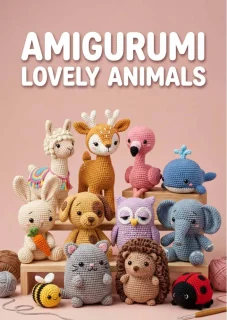
Twelve detailed amigurumi animal patterns, from an octopus and seahorse to a sloth, puppy, piggy and sleepy sheep.
A short, practical guide packed with organizing hacks, tension advice and fixes for the most common crochet mistakes.