Water Storage for Preppers
A complete guide to finding, purifying, storing and testing water, from rain barrels and DIY filters to emergency wells.
The Prepper’s Survival Bible · 53 pages · PDF
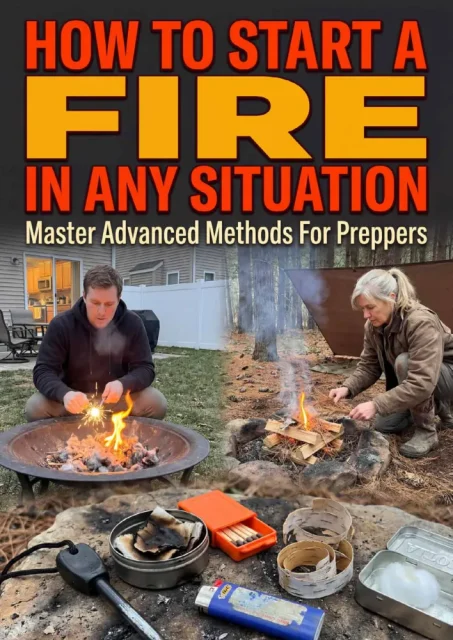
Master advanced methods for preppers
From flint and steel to a fire piston, learn reliable fire-starting methods for wet, windy, desert and forest conditions.
Fire gives you warmth, light, a way to cook food and a way to boil water. It is also the skill most people assume they have until they try it in the rain. How to Start a Fire in Any Situation is a hands-on guide to building that skill properly, with traditional, modern and improvised methods and advice for the conditions that make fire hard.
The first chapter covers the fundamentals: why fire matters in a survival situation, the essential tools and materials to carry, and safety precautions such as clearing a safe area, keeping water nearby, avoiding accelerants and respecting local fire bans. It then walks through using flint and steel.
From there, the book works through a wide range of techniques:
Dedicated chapters tackle starting a fire in wet conditions, in wind and in the desert, then look at forest and sea environments. This is where many guides stop short, and where practice matters most.
The later chapters focus on becoming reliable: fire-starting drills and challenges, building confidence, using natural tinder, building an efficient fire lay and maintaining a fire for cooking and warmth. The final section helps you preserve fire-starting materials, assemble a fire-starting kit and fit fire into your wider survival plan.
Always practice in a safe, legal location, check local fire restrictions, and fully extinguish every fire before you leave it.
It covers flint and steel, bow drill, fire plough, Dakota fire hole, magnifying glass or Fresnel lens, fire piston, ferrocerium rod, magnesium fire starter, solar lighter, battery and steel wool, parabolic mirror and fire steel. It also explains how to adapt your approach for wet, windy, desert, forest and sea conditions.
Yes. It starts with fundamentals such as tools, tinder and safety before moving to harder methods. The practice chapter offers drills and challenges so you can build skill gradually. Most beginners find a ferro rod the easiest reliable method to learn first, then progress to friction methods like the bow drill.
Yes. It stresses choosing and clearing a safe area, containing the fire, keeping water or an extinguisher nearby, avoiding accelerants like gasoline, never leaving a fire unattended and extinguishing it fully. It also reminds readers to check fire bans and local regulations before practicing.
A complete guide to finding, purifying, storing and testing water, from rain barrels and DIY filters to emergency wells.
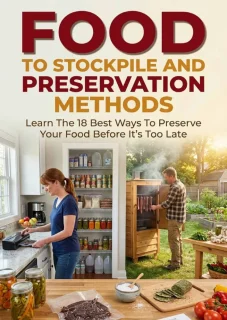
A practical pantry plan: essential emergency foods, staples that last for years and 18 preservation methods explained.
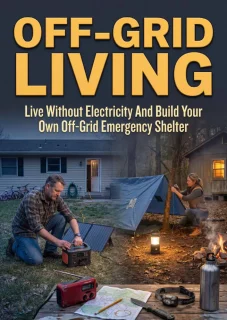
How to live without electricity: shelter, off-grid power, composting, heating and cooling, and staying healthy beyond the grid.
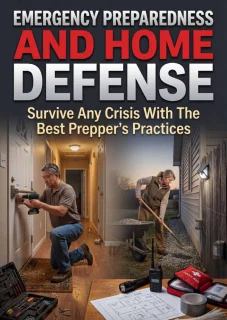
Turn supplies into a family plan: emergency kits, first aid, navigation without the internet and practical home security.
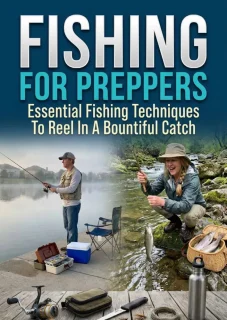
Turn fishing into a dependable food skill: gear, techniques, traps and nets, preservation and a year-round fishing plan.
Grow your own food, approach wild plants with caution and learn which herbs belong in a traditional home kit.
Twenty hands-on builds from everyday materials: water filters, stoves, lights, sanitation, signaling and small-scale power.
The financial side of a long grid-down event: budgeting, emergency funds, documents, bartering and recovery.