Water Storage for Preppers
A complete guide to finding, purifying, storing and testing water, from rain barrels and DIY filters to emergency wells.
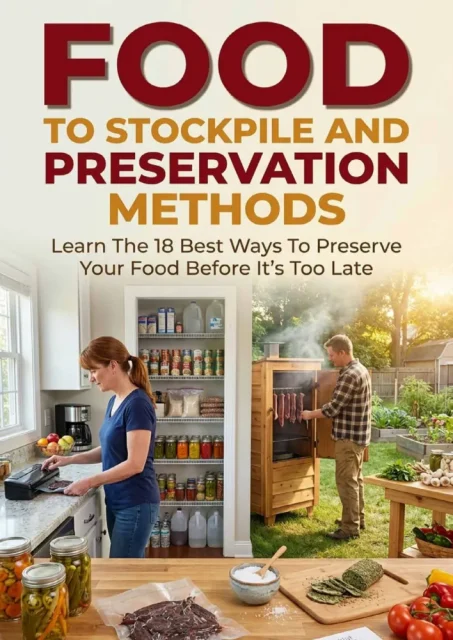
The Prepper’s Survival Bible · 57 pages · PDF
What to store, what lasts for years and 18 ways to preserve your own food
A practical pantry plan: essential emergency foods, staples that last for years and 18 preservation methods explained.
A good pantry is the quiet backbone of every emergency plan. Food to Stockpile & Preservation Methods helps you build one deliberately, starting with a basic emergency food kit and working up to long-term storage and home preservation skills that keep your shelves full year after year.
The first chapter sets out the essentials: a portable emergency kit, why water comes first, and the special items people forget, such as baby food, food for older relatives with specific needs, vitamins and pet food. It also includes a list of 20 non-food survival items worth stockpiling, such as batteries, flashlights, lighters, toilet paper, tape and backup power options.
Chapters 2 and 3 get specific about what to buy. You will find 10 survival foods worth stocking before you need them and 12 foods that can last for years, along with advice on how to tell if canned food has spoiled and why powdered foods are so useful for long-term storage.
The largest chapter turns you from a buyer into a producer. It surveys a wide range of preservation methods so you can match the technique to the food and the equipment you have:
Home canning in particular carries real food-safety risks if done incorrectly. Use this book as an overview of your options, and follow tested recipes and current guidance from the USDA or your local extension service for processing times and methods.
Whether you want a three-day kit or a pantry that carries your family through a hard season, this guide gives you a clear shopping list and the skills to extend it.
It gives concrete lists: a basic emergency food kit, 20 survival items to stockpile, 10 survival foods to stock early and 12 foods that can last for years. You can use these as a shopping checklist and adjust quantities for your household size, dietary needs and storage space.
Not exactly. It is a broad guide to 18 preservation methods, of which water bath and pressure canning are two. It explains the methods, containers and handling, then covers alternatives like drying, fermenting, salting and smoking. For precise canning times and recipes, follow tested sources such as USDA guidance or your local extension office.
Several of the methods covered work without power, including salting, smoking, sun or air drying, fermenting, pickling and preserving in oil or fat. The book explains each so you can choose the right option for off-grid situations or extended outages, while following food-safety guidance for each method.
A complete guide to finding, purifying, storing and testing water, from rain barrels and DIY filters to emergency wells.
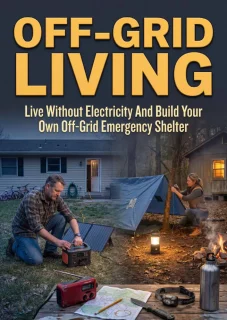
How to live without electricity: shelter, off-grid power, composting, heating and cooling, and staying healthy beyond the grid.
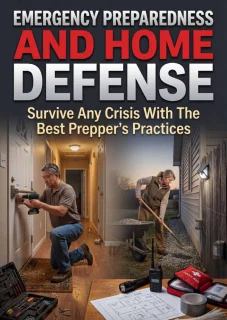
Turn supplies into a family plan: emergency kits, first aid, navigation without the internet and practical home security.
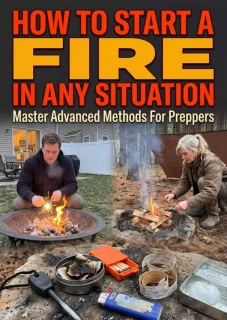
From flint and steel to a fire piston, learn reliable fire-starting methods for wet, windy, desert and forest conditions.
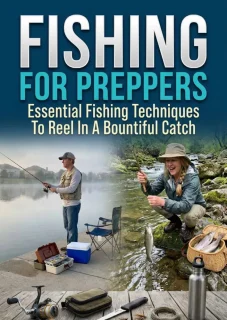
Turn fishing into a dependable food skill: gear, techniques, traps and nets, preservation and a year-round fishing plan.
Grow your own food, approach wild plants with caution and learn which herbs belong in a traditional home kit.
Twenty hands-on builds from everyday materials: water filters, stoves, lights, sanitation, signaling and small-scale power.
The financial side of a long grid-down event: budgeting, emergency funds, documents, bartering and recovery.