Water Storage for Preppers
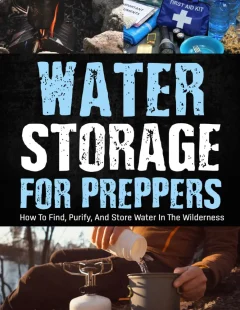
A complete guide to finding, purifying, storing and testing water, from rain barrels and DIY filters to emergency wells.
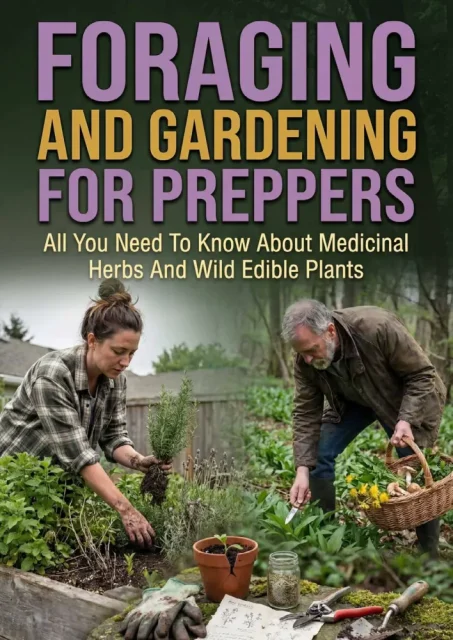
The Prepper’s Survival Bible · 31 pages · PDF
All you need to know about medicinal herbs and wild edible plants
Grow your own food, approach wild plants with caution and learn which herbs belong in a traditional home kit.
Stored food eventually runs low. Growing your own, and knowing how to recognize what nature offers, extends your pantry indefinitely. Foraging & Gardening for Preppers is a compact introduction to both, with a strong emphasis on doing it carefully.
Chapter 1 covers gardening for preppers: planning around your climate and soil, what you need to start, and common mistakes to avoid. It then focuses on growing plants indoors, including choosing an air pump, pots and growing medium, and using a TDS meter to monitor your nutrient solution. An indoor setup lets you keep producing greens and herbs year-round and out of sight.
Chapter 2 introduces foraging and is clear about the risks: many edible plants have toxic look-alikes, some plants have both safe and poisonous parts, and a large share of wild mushrooms are dangerous. The book discusses the universal edibility test, stating plainly that it is not foolproof, and lists warning signs such as bitter or almond-like tastes and unpleasant smells. It also covers alternative foraging such as insects, the reasons people forage and a practical list of things to remember and things to avoid.
The most important rule is simple: never eat a wild plant or mushroom unless you have positively identified it with complete certainty. Use this book as a starting point, then learn from reputable regional field guides and experienced local foragers. The book's own advice is worth repeating: if in doubt, leave it out, because a hungry person has more time to find safe food than they think.
Chapter 3 describes herbs that are traditionally kept in a home herbal first aid kit, such as fennel, calendula, milk thistle, dandelion, echinacea and eucalyptus, and how to store them in glass jars. Speak with a qualified healthcare provider before using any herb, especially if you are pregnant, nursing, taking medication or treating a child.
This content is for education only and is not medical advice.
It gives you the principles and warning signs, but no book alone can make you a safe forager. Many edible plants have deadly look-alikes. Only eat a wild plant when you have positively identified it with complete certainty, ideally confirmed with a regional field guide and an experienced local forager. If you are unsure at all, do not eat it.
The book describes the universal edibility test and states clearly that it is not foolproof. Some plants are dangerous even in tiny amounts, and many mushrooms cannot be tested this way at all. Treat it as a last-resort concept, never as a substitute for positive identification.
No. It describes herbs traditionally used in home kits and how to store them, for educational purposes. Herbs can interact with medications and are not suitable for everyone. Always consult a qualified healthcare professional before using any herbal product, and seek medical care for any injury or illness.
A complete guide to finding, purifying, storing and testing water, from rain barrels and DIY filters to emergency wells.
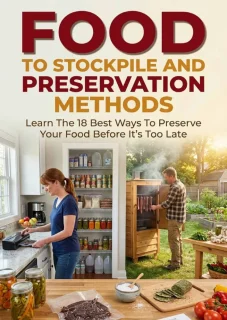
A practical pantry plan: essential emergency foods, staples that last for years and 18 preservation methods explained.
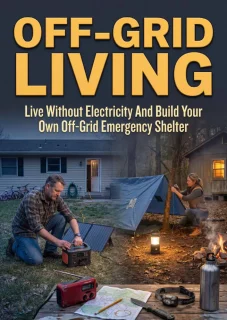
How to live without electricity: shelter, off-grid power, composting, heating and cooling, and staying healthy beyond the grid.
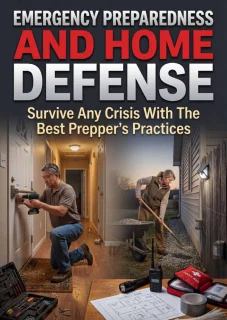
Turn supplies into a family plan: emergency kits, first aid, navigation without the internet and practical home security.
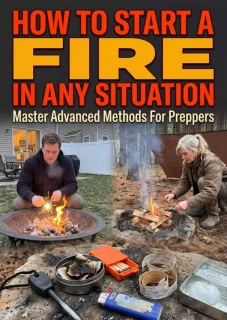
From flint and steel to a fire piston, learn reliable fire-starting methods for wet, windy, desert and forest conditions.
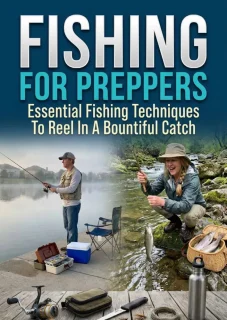
Turn fishing into a dependable food skill: gear, techniques, traps and nets, preservation and a year-round fishing plan.
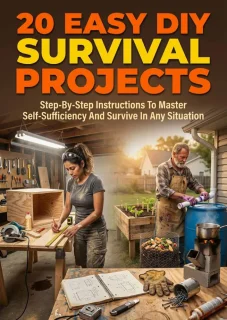
Twenty hands-on builds from everyday materials: water filters, stoves, lights, sanitation, signaling and small-scale power.
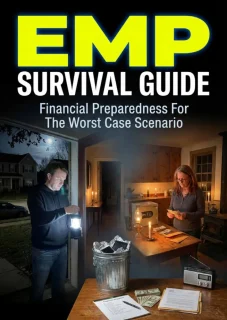
The financial side of a long grid-down event: budgeting, emergency funds, documents, bartering and recovery.